Climate inaction: where is the “bug”? From cognitive limits to intergroup dynamics

Climate inaction: where is the “bug”? From cognitive limits to intergroup dynamics Dr. Camille Langlais (Université libre de Bruxelles) Psychologists have studied the reasons for climate inaction since the 1990s. One widely studied barrier is psychological distance: in Western countries, climate change was long assumed to be perceived as affecting

Start

13 October 2026 - 12 h 45 min

End

13 October 2026 - 14 h 00 min

Categories

Departement Seminar

Climate inaction: where is the “bug”? From cognitive limits to intergroup dynamics

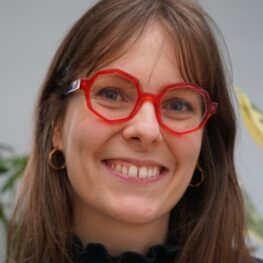
Dr. Camille Langlais (Université libre de Bruxelles)

Psychologists have studied the reasons for climate inaction since the 1990s. One widely studied barrier is psychological distance: in Western countries, climate change was long assumed to be perceived as affecting distant others, in remote places and in the future. In this talk, I will first present experimental studies from my PhD, conducted with French samples, along with two meta-analyses synthesizing studies from 64 countries. Overall, results show that the effect of psychological distance on climate action is smaller than usually assumed.

Next, drawing on critical psychology, I will discuss the dominant narratives behind the prevailing assumption that climate change should be framed as a proximal threat to motivate action. Then, applying a social identity approach, I will argue that this framing may backfire when used among advantaged groups in the Global North, and that accounting for unequal responsibility and vulnerability could improve our understanding of climate action.

Finally, I will introduce VICLIM, an emerging project that examines climate change through collective victim beliefs. I will present its main hypotheses and a first pilot study (N = 520) that compares three forms of climate-related inequality (socioeconomic, intergenerational, and socio-spatial) as predictors of support for climate policies. Results show that intergenerational victimhood, based on perceived unequal impacts, is the strongest predictor of policy support. In contrast, for socioeconomic and socio-spatial inequalities, perceiving one’s group as a victim of climate policies, rather than of climate change, is associated with rejection of climate policies.
The talk will take place in the CeSCuP’s seminar room as well as online.

Leave a Reply

Your email address will not be published. Required fields are marked *

CONTACT

Université Libre de Bruxelles
50 Avenue Franklin Roosevelt CP122
B-1050 Bruxelles, Belgium

Administrative assistant: Luce Vercammen (luce.vercamen@ulb.be)

Phone: +32 (2) 650 4643