Start
15 September 2026 - 12 h 45 min
End
15 September 2026 - 14 h 00 min
Categories
Departement SeminarReimagining Intergroup Apologies: A Bottom-Up Approach to Social Cohesion
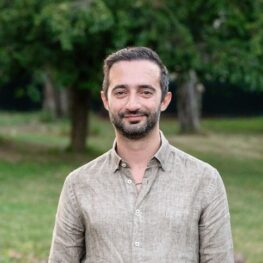
Prof. Yasin Koç (University of Groningen, Netherlands)
Abstract: Research on intergroup apologies has typically focused on official apologies and asked whether they are perceived as sincere, reduce collective guilt, or promote forgiveness. In this talk, I will argue that this emphasis overlooks two central actors in processes of intergroup repair: members of affected communities, who may hold distinct understandings of acknowledgment, accountability, and justice; and ordinary citizens, who can actively acknowledge injustices committed in their group’s name.
I will present a programme of research comprising experiments, interviews, and a video-based art project that develops a bottom-up, affected-community-centred account of intergroup apologising. Three experiments conducted in the United States examined what happens when White Americans are invited to apologise to the Black community following the murder of George Floyd. Apologising did not alleviate collective guilt. Instead, it increased support for Black Lives Matter through increased guilt without undermining personal well-being or self-esteem.
I will then discuss how we are extending this approach across different contexts of injustice, including immigration enforcement and LGBTQIA+ hate crime, and across the perspectives of both those offering and those receiving apologies. Interviews with participants in the Netherlands, United Kingdom, Cyprus, and United States examine whether apologies are wanted, what they must acknowledge, and when they can contribute to accountability, material repair, and social change. Together, this work moves beyond asking whether apologies “work” and instead examines who gets to define meaningful acknowledgment, who can participate in repair, and when citizen-led apologies can become part of a broader process of justice and social transformation.
The seminar will take place in the CeSCuP seminar room, as well as online via this link.

